
Mathematics is not about memorising formulas or solving endless questions. It is about developing conceptual clarity, recognising patterns and applying knowledge confidently in unfamiliar situations.
True mathematical mastery begins with strong foundations.
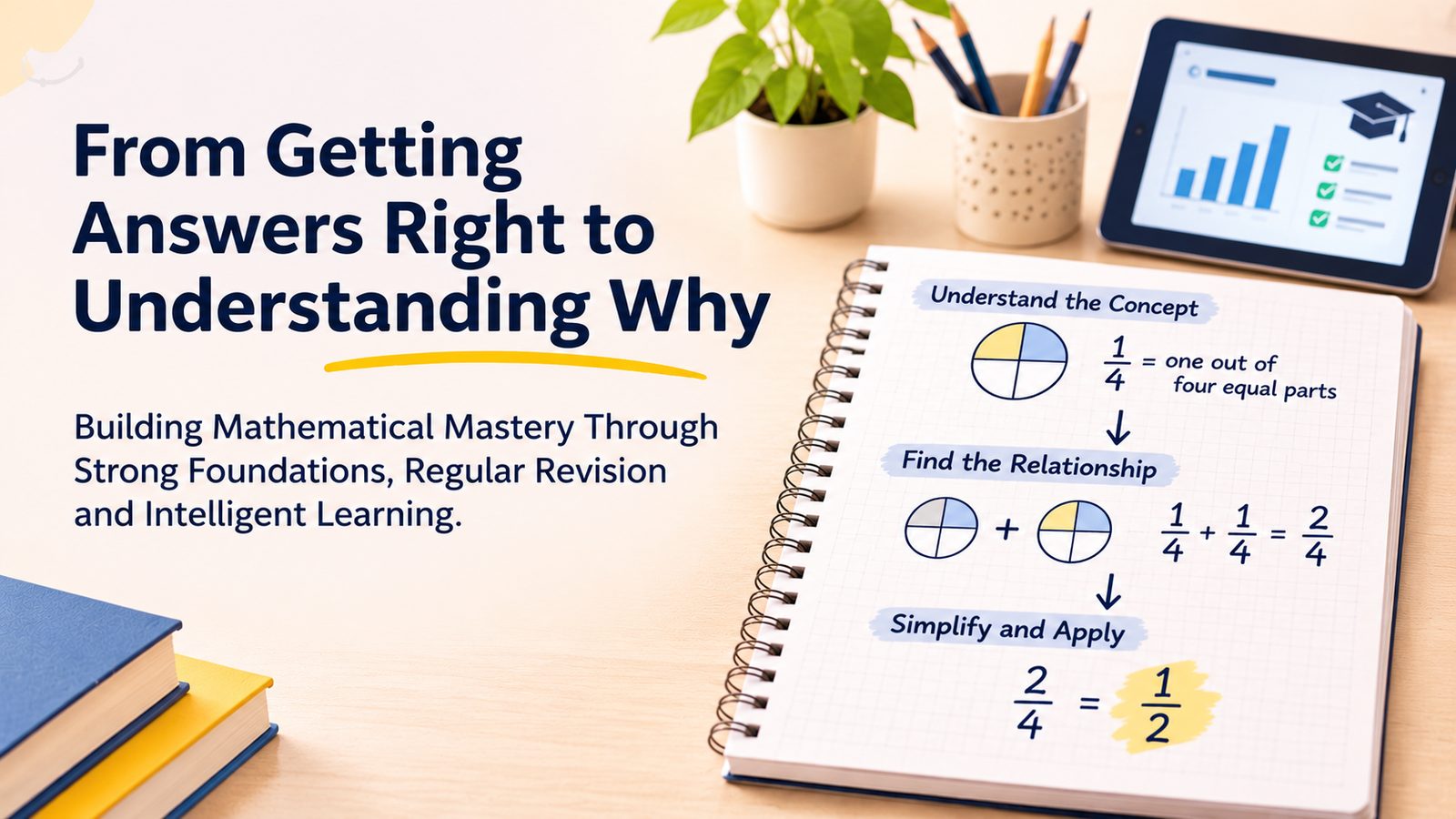
Every new concept builds on something a student has learned before. Teachers must therefore start with the basics, establish conceptual clarity and gradually progress towards more complex applications. For instance, multiplication should build on addition and equal groups, while fractions should begin with an understanding of equal parts.
Moving ahead without strengthening these foundations can create learning gaps that become increasingly difficult to address.
But teaching a concept once is only the beginning. Regular revision transforms initial understanding into lasting knowledge.
Students need opportunities to revisit concepts at planned intervals, practise different types of questions and apply their understanding in new contexts. Repeated exposure strengthens recall, builds confidence and helps students move beyond memorising procedures to understanding the underlying mathematical ideas.
This is where technology and AI can make learning more meaningful and personalised.
Imagine a learning environment where every student's responses provide insights into their understanding. Instead of simply identifying which answers are incorrect, teachers can understand the misconceptions behind those answers.
Technology-enabled assessments and intelligent learning systems can help:
- Identify specific conceptual gaps and recurring misconceptions.
- Recommend targeted practice based on individual learning needs.
- Provide varied questions to reinforce the same concept.
- Offer timely feedback and explanations.
- Help teachers make informed decisions about what to reteach and revise.
The real opportunity lies in closing the feedback loop between assessment and teaching.
However, technology cannot replace the role of a good teacher. Teachers remain central to building conceptual clarity, asking meaningful questions, addressing misconceptions and guiding students towards independent thinking. Technology should empower teachers with better insights and more time to focus on actual learning.
When strong pedagogy is combined with continuous revision, meaningful assessment and intelligent personalisation, learning becomes more effective and inclusive.
Ultimately, the goal of Mathematics education is not simply to help students get the right answers today, but to help them understand why those answers are right and retain that understanding for life.
Build strong foundations. Reinforce through regular revision. Understand every mistake. Make learning last.
Posts share their writers' own experience and views, not Clay Learning's. They are not medical, legal or professional advice. Report this post
Get new posts every Sunday
Liked this? Get new posts like it in one short email every Sunday.